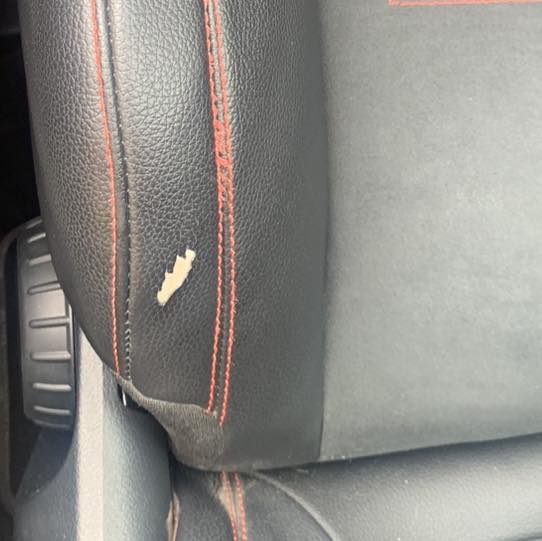

If your car seats are starting to peel, flake or bubble, you’re not alone. It’s one of the most common interior complaints we see at our South Wales workshop — and it affects far more vehicles than most people realise.
The good news is that peeling car seats are almost always repairable. The even better news is that a professional repair costs a fraction of what a main dealer would charge for seat replacement. Here’s everything you need to know.
Why Do Car Seats Peel?
The first thing to understand is that most “leather” car seats aren’t actually leather — they’re faux leather, also known as PU leather, bonded leather or vinyl. Even vehicles marketed as having leather interiors often use a blend of genuine leather on the main seating surfaces with PU or vinyl on the bolsters, sides and backs.
Faux leather is made by bonding a thin layer of polyurethane to a fabric backing. Over time that bond breaks down — and when it does, the surface starts to peel, flake and crack. This is a material failure, not a sign that the seats have been badly looked after.
UV Exposure
Ultraviolet light degrades the polyurethane coating over time. Cars parked outdoors or with large windscreens are particularly vulnerable.
Heat
Interior temperatures in a parked car can exceed 60°C in summer. Sustained heat accelerates the breakdown of the PU layer significantly.
Friction
The areas that peel first are almost always those used most — the driver’s seat bolster, the seat base and the headrest edges.
Lack of Conditioning
Faux leather that isn’t cleaned and conditioned regularly dries out faster, making the surface more brittle and prone to cracking.
Worth knowing: Most peeling starts to appear on vehicles between five and eight years old regardless of how well the interior has been maintained. If your car is in that age bracket and the seats are starting to go, it’s the material doing what PU leather does — not a reflection of how you’ve cared for it.
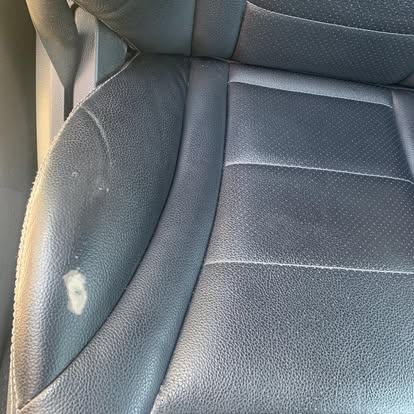
Is It Just Faux Leather That Peels?
Genuine full-grain leather doesn’t peel in the same way — it cracks, fades and dries out, but the surface doesn’t delaminate like PU leather does. However, genuine leather is much less common in production cars than most buyers assume. Even premium manufacturers use PU or bonded leather extensively, particularly on lower trim levels.
If you’re not sure what material your seats are, the easiest test is to look at where the damage is occurring. If it’s peeling or flaking in sheets, it’s almost certainly PU or bonded leather. If it’s cracking and drying without lifting from the surface, it’s more likely genuine leather — and the repair approach differs accordingly. Either way, both are repairable by a specialist.
What Are My Options?
When car seats start peeling, most people assume the only options are to live with it, cover the seats or pay for full replacement. In reality there’s a fourth option that most drivers aren’t aware of.
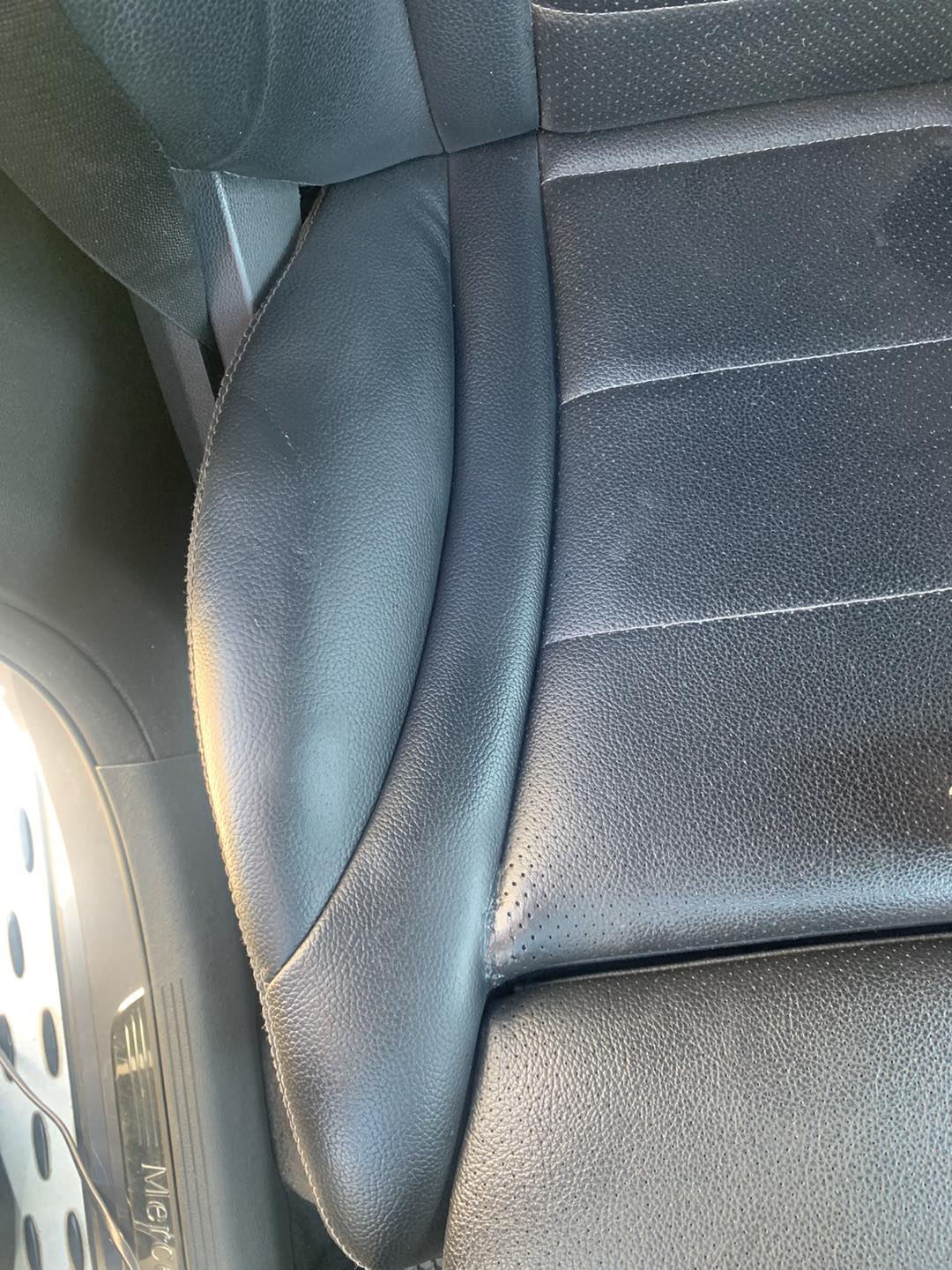
Repair or Reupholstery — Which Do You Need?
For localised peeling — a section of bolster, a patch on the seat base, a headrest edge — repair is usually the right call. The damaged material is treated, the area is built back up with a flexible compound, and the colour and texture are matched and sealed. Done properly, the repair is difficult to distinguish from the original surface.
For seats where the peeling has spread across a large area, or where the PU layer has broken down extensively, full reupholstery is often the better investment. We fit new material — leather, faux leather or fabric — directly to the existing seat frame. The result is a seat that looks new, lasts well, and typically costs significantly less than manufacturer replacement parts.
We’ll always give you an honest assessment of which approach makes more sense for your vehicle.
How to Slow Down Peeling on Your Remaining Seats
- Use a quality interior cleaner and conditioner on your seats every few months — products designed specifically for faux leather rather than generic household cleaners.
- Park in shade or use a windscreen sun shade in summer. Interior heat is one of the biggest accelerators of PU breakdown.
- Wipe seats down after use if they’ve been exposed to moisture or sweat — leaving damp material to dry on the surface degrades the coating faster.
None of this will stop PU leather from eventually peeling — it’s a characteristic of the material — but it will extend the life of the surface noticeably.
Get a Free Assessment
We work with customers from across South Wales on exactly this type of repair every week — from single seat bolsters to full interior reupholstery. Give us a call or email a photo and we’ll come back with an honest assessment and a price.